



【Current Exhibition】KAZAMA Sachiko: Clairvoyance in a 9㎡ room
-

-
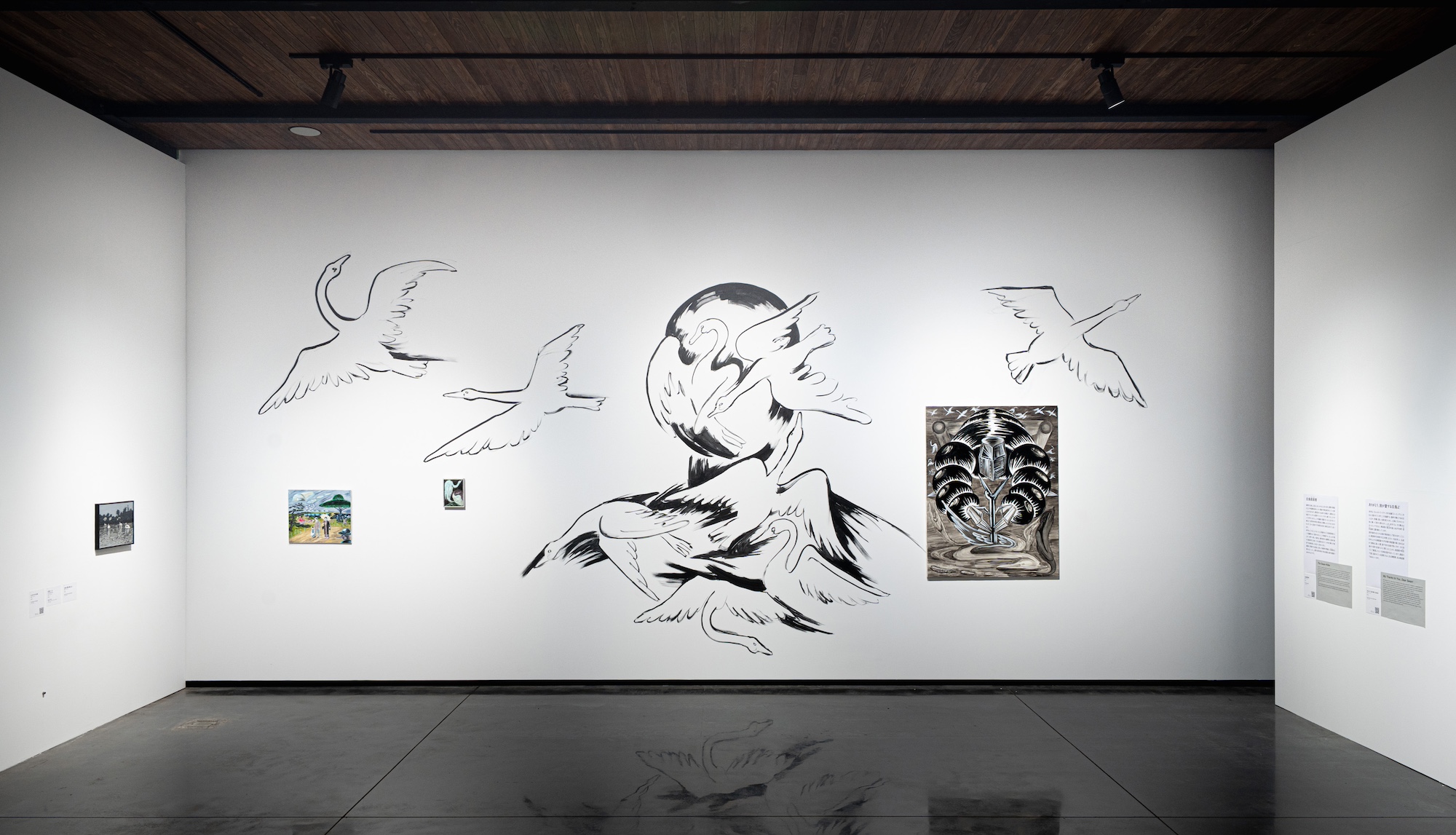
Installation View Photo by Ryo Narita
-
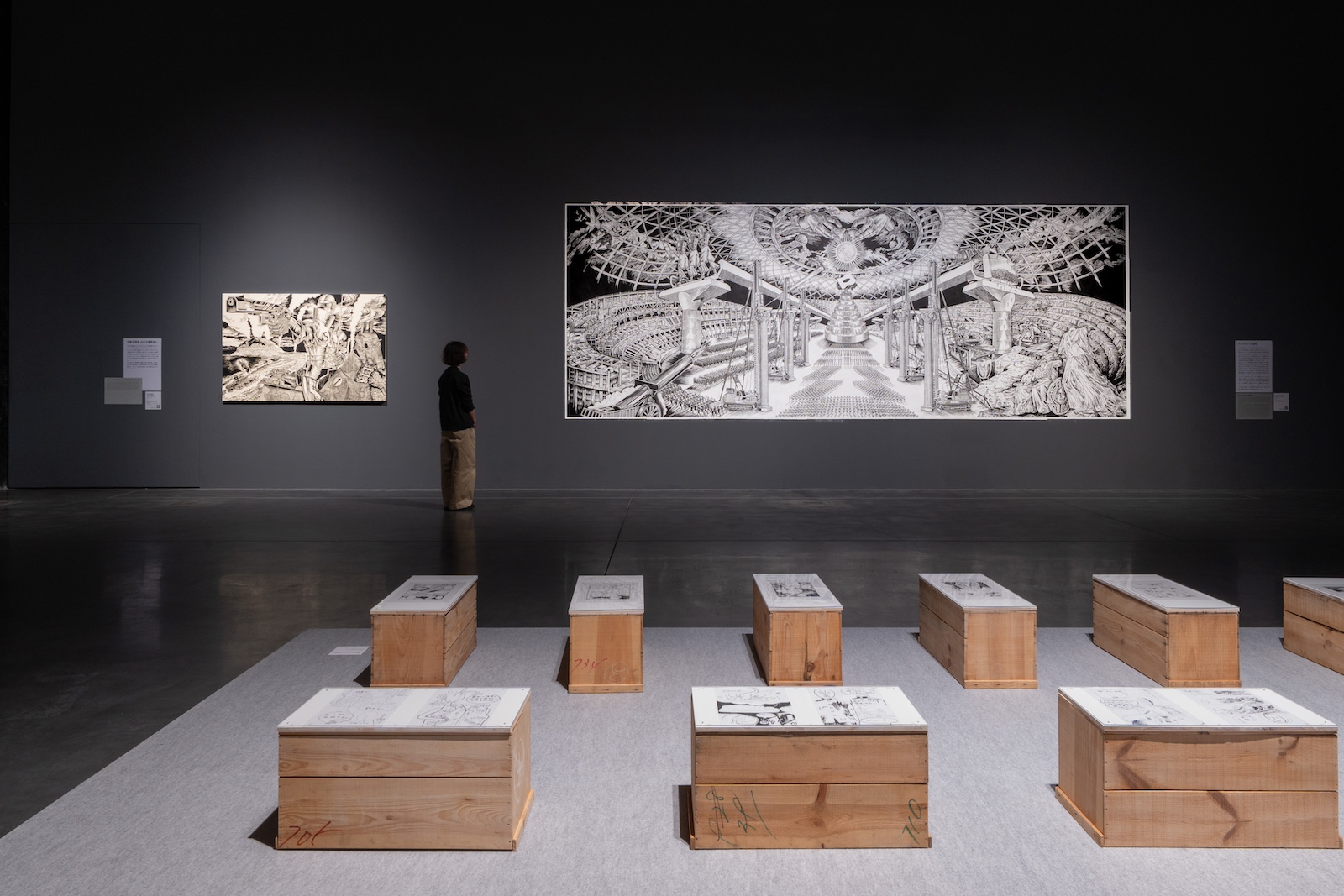
Left: KAZAMA Sachiko, Baron Kindai Goshu Maro in Iwo Jima, 2017 Private Collection
Right: KAZAMA Sachiko, Dyslympics 2680, 2018 Collection of the Artist (A.P.)
Installation View Photo by Ryo Narita -
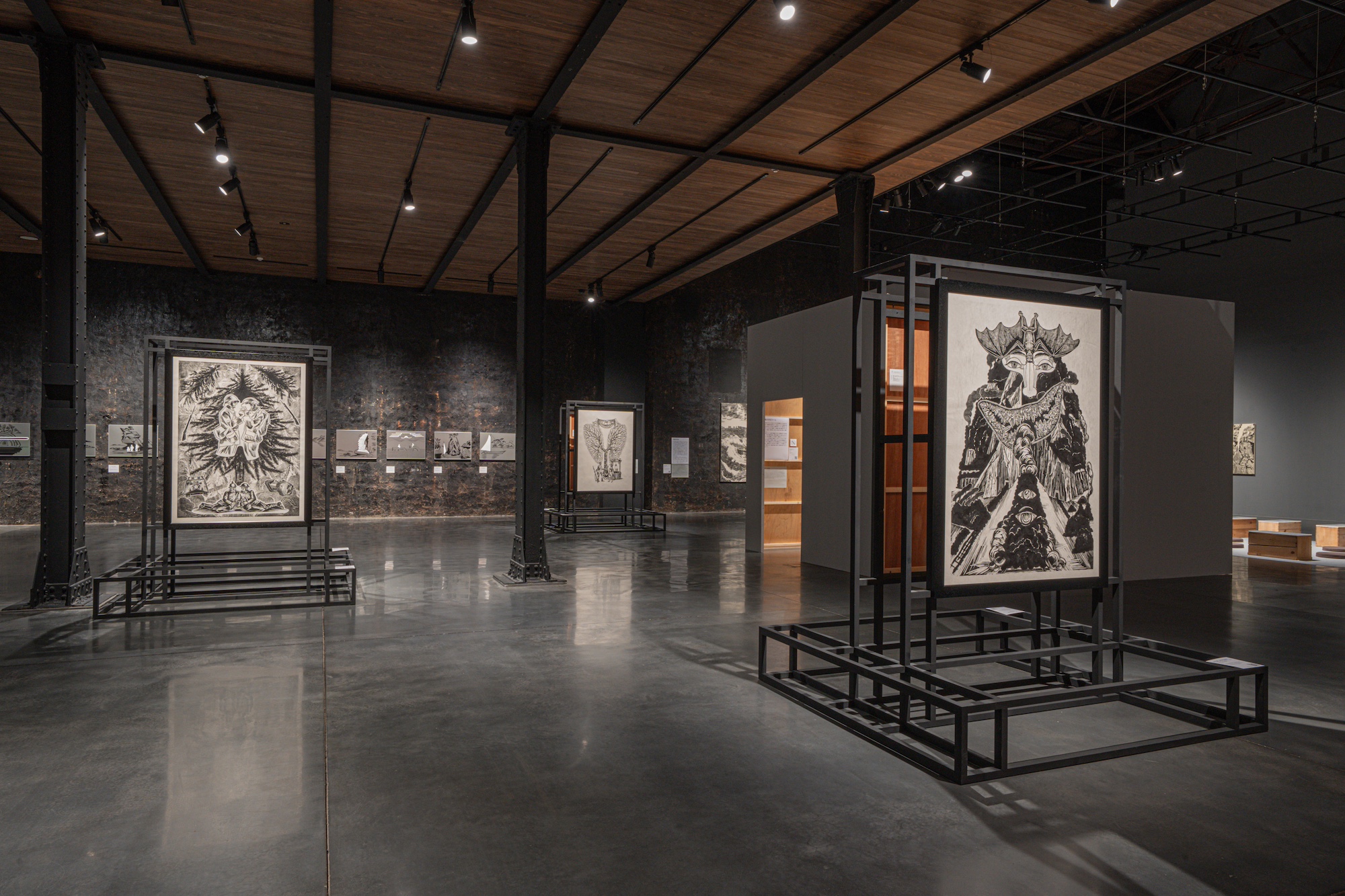
Installation View Photo by Ryo Narita
-
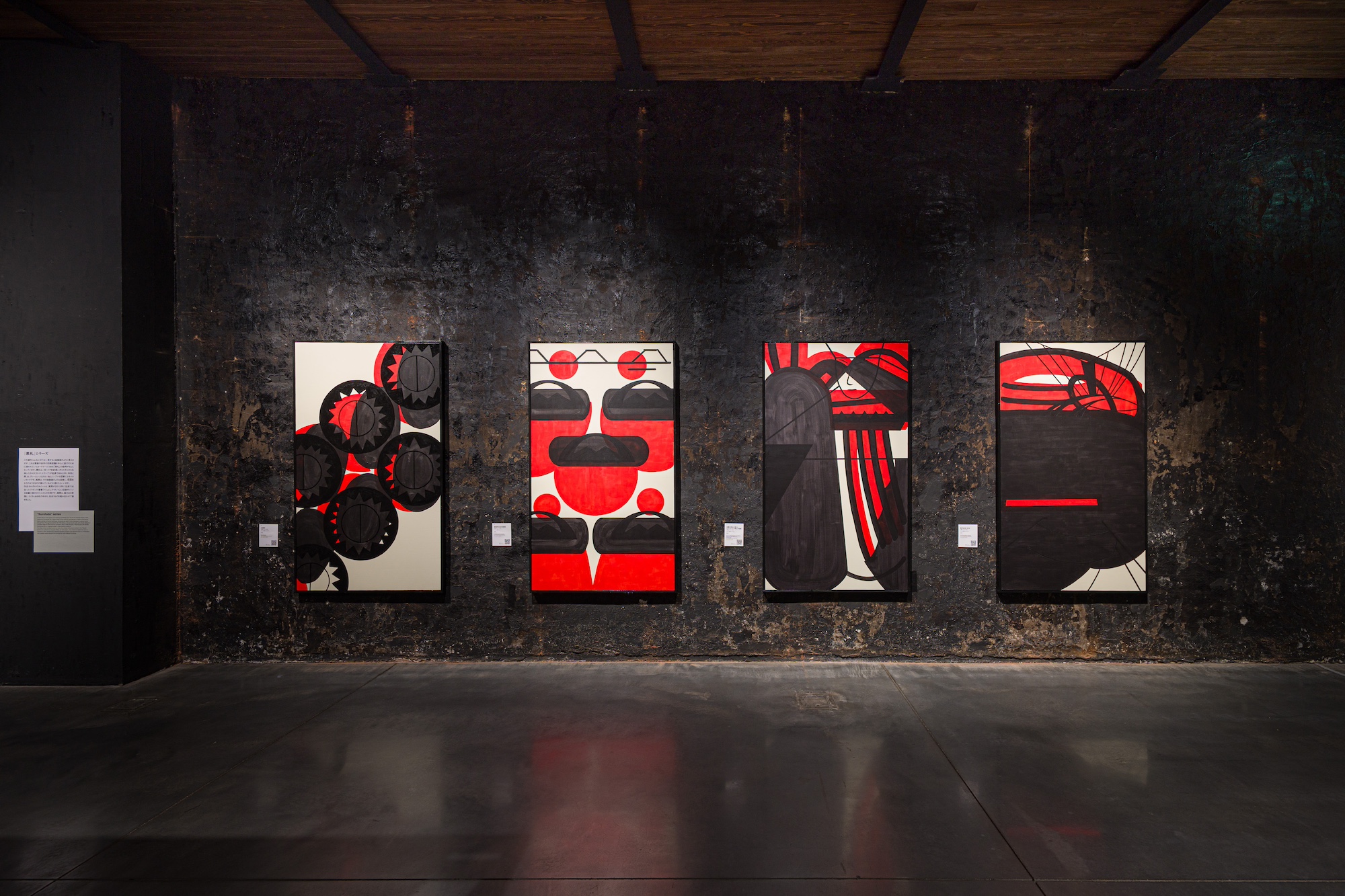
KAZAMA Sachiko, Necromancy, The Eventualists' banquet, Doctor Tribulat Bonhomet's Motion Regarding, A Sentimental Polemicist, 2026 Collection of the Artist
Installation View Photo by Ryo Narita
Kazama Sachiko (b. 1972) has spent her career depicting the contradictions and incongruities of a Japanese society molded by modernization, through woodcuts printed uniformly in black that bring an idiosyncratic sense of humor and astute criticality to the expression of societal events that sit alongside our personal everydays, from the Olympics and nuclear energy, to familiar settings such as school.
In addition to Kazama’s large woodcuts of recent years, this exhibition will mark the unveiling of a number of oil paintings, a new venture for the artist. These include the “swan” series inspired by a book Kazama encountered in Hirosaki, plus a selection of Aomori landscapes such as Gappo Park and the Asadokoro Coast, on which she superimposes images from history, legend and literature.
Within society lurk distortions difficult to articulate. Kazama’s expression, with its regard for how people sense and imagine the world, illuminates our everyday lives from alternative angles. One laughs, yet is somehow hooked: such is the society thrown into relief by the vision of Kazama Sachiko.
Artists
-

KAZAMA Sachiko
Born in Tokyo 1972, lives and works in Tokyo. Kazama primarily creates black and white woodblock prints, that feature intricate compositions of diverse motifs within a single frame. Her major solo exhibitions include “Tokyo Contemporary Art Award 2019-2021” (Museum of Contemporary Art Tokyo, Tokyo, 2021), “Kazama Sachiko ‘Concrete Suite’” (Kurobe City Art Museum, Toyama, 2019), and “Dyslympia 2680” (Maruki Gallery For The Hiroshima Panels, Saitama, 2018). She has participated in numerous exhibitions in Japan and internationally, including major international exhibitions such as the Sydney Biennale (Australia, 2024), the Yokohama Triennale (Kanagawa, 2017), and the Gwangju Biennale (South Korea, 2016).
-
-
Exhibition Hilights
Premiere of the artist’s first oil paintings
 KAZAMA Sachiko, My thanks to you, dear swan!, 2026
Collection of the artist ©︎Sachiko Kazama Courtesy of the artist and MUJIN-TO Production Photo by Kei Miyajima
The exhibition premieres a new body of oil paintings, featuring various swans that have appeared in literature and music. Kazama’s interest in the motif of the swan began in 2015, when she came across a copy of Tribulat Bonhomet by Auguste Villiers de l’Isle-Adam at a secondhand bookstore in Hirosaki during a residency at the Aomori Contemporary Art Centre (ACAC). This fantasy novel depicts how the protagonist, Dr. Bonhomet, repeatedly becomes entangled in strange and absurd situations despite his attempts to understand the world through science and reason. For instance, in one of the stories included in the book, The Swan-Killer, the protagonist learns that the cry of a swan at the moment of its death is the most beautiful sound in the world. Determined to verify this, he dresses as a medieval knight and heads to the water’s edge to kill a swan. Here, the swan functions as a symbol of irrational beauty — encompassing personal emotions, imagination, and aesthetic sensibility beyond scientific reason — and this story will take form in Kazama’s new work The Swan-Killer.
Additionally, Kazama’s work My thanks to you, dear swan! (2026) draws on Richard Wagner’s opera Lohengrin, in which a knight arrives in a boat pulled by a swan to rescue a princess in distress. The scene is transposed onto the landscape of Asadokoro Coast in Hiranai Town, on the Natsudomari Peninsula, layered with local legends associated with swans. By combining familiar modern settings found across Japan with imagery drawn from opera, literature, and legends, Kazama seeks to depict a romantic, imaginative world that exists alongside our everyday reality.
An extensive selection of major woodcut prints from recent years
 KAZAMA Sachiko, Dyslympics 2680, 2018
Collection of the artist (A.P.) Photo by Kei Miyajima
Focusing on the museum’s distinctive exhibition hall with an open atrium, the exhibition also features large-scale woodcut prints that represent Kazama’s recent practice. Alas! Heisoku-kan (Raging Battle-ship the Dead-end) (2012), created in response to the Great East Japan Earthquake and the Fukushima Daiichi Nuclear Accident, depicts the relationship between nuclear power and historical catastrophes within human society. In Dyslympics 2680 (2018), Kazama superimposes the Tokyo Olympics scheduled for 2020 with the “phantom” Tokyo Olympics of 1940, which was canceled due to the war. Great Dazzle War (2017) portrays Jiraiya, a fictional hero and sorcerer from Edo-period literature, engaged in battle with a salaryman constrained by contemporary social norms. This exhibition showcases how Kazama constructs allegorical images that explore the conflicts between the structures of modern and contemporary society and the individual in her works.
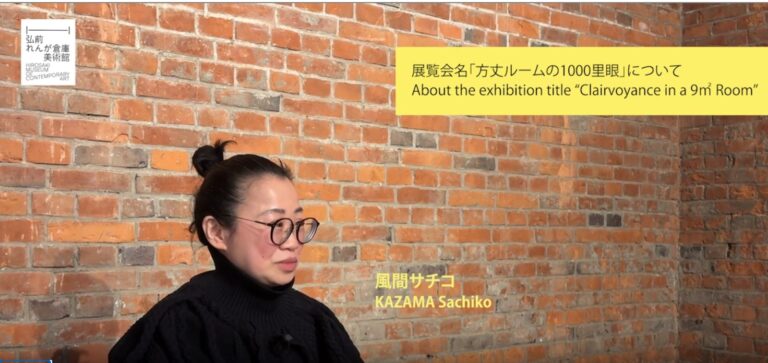
Artist Interview
Watch and read the artist’s insights on the free Bloomberg Connects app.
Accessible on both smartphones and web browsers, it serves as your guide during your visit or for viewing at home.
The Bloomberg Connects page for “KAZAMA Sachiko: Clairvoyance in a 9㎡ room” is here.
Flyer

Design: KUROMARU Kenichi
Outline
- Date: 2026. 6. 5 (FRI) - 11. 15 (SUN)
Closed: Tuesdays, Aug. 12, Sep. 24 and Nov. 4 (except on Aug. 4, 11, Sep. 22, Nov. 3)
Opening hours: 9:00-17:00
Last admission 30 minutes before closing
Venue: Hirosaki Museum Contemporary Art - Organizer: Hirosaki Museum of Contemporary Art
-
Special Sponsor: Starts Corporation Inc.
Sponsor: OBAYASHI CORPORATION, NTT FACILITIES, INC.
Cooperation: MUJIN-TO Production
Under the patronage of: The To-o Nippo Press, THE DAILY TOHOKU SHIMBUN, THE MUTSU SHIMPO Press, Aomori Broadcasting Corporation, Aomori Television Broadcasting Co., Ltd., Asahi Broadcasting Aomori Co., Ltd., Aomori Fm Broadcasting, FM APPLE WAVE, Hirosaki City Board of Education
- Admission [tax included]:
Adults 1,600 yen (1,000 yen)
University & College Students 1,000 yen (500 yen)
* ( ) Price for Hirosaki residents (not valid in conjunction with any other offers or promotions) Free of charge for high school students and under;
international students in Hirosaki city; citizens of Hirosaki over 65, the disabled and one accompanying attendant